WooCommerce customer retention is the cheapest growth lever you have. Acquiring a new customer costs 5–25× more than retaining an existing one — yet most stores spend 80% of their marketing budget on acquisition and only 20% on retention.
The fix is a system: loyalty points, referrals, post-purchase emails, and CLV tracking. All four are covered below with free plugins for each.
You’ve built your store, added products, optimized checkout, set up subscriptions, and started advertising on Google. But there’s one thing that separates successful stores from struggling ones: repeat customers.
According to data from Bain & Company, increasing customer retention rates by just 5% can boost profits by as much as 95%. Yet most store owners spend 80% of their marketing budget on acquisition and barely 20% on retention.
That’s a mistake. Your existing customers already trust you. They’ve already bought from you. They’re far more likely to buy again than a complete stranger. The question is: how do you encourage them to come back?
The numbers that matter:
- 5% more retention = 25–95% more profit (Bain & Company)
- 60–70% of existing customers will buy again (vs 5–20% of new prospects)
- 20% of customers generate 80% of revenue — identify them, reward them, keep them
This guide covers:
7 retention tactics — ranked by difficulty and impact
Loyalty programs — MyRewards, Unstoppable Points, and 5 other free plugins
Referral programs — reward both parties, track conversions
Returns & exchanges — Recoup and RMA plugins that build trust
Email sequences — 6-email post-purchase flow (with timing)
Customer Lifetime Value — the formula and how to track it in WooCommerce
Part 1: Why Retention Matters More Than Acquisition
Most store owners focus obsessively on getting new customers. They run Facebook ads, Google campaigns, and influencer partnerships — all while ignoring the customers they already have.
Here’s why that’s a mistake:
| Metric | New Customer | Existing Customer |
|---|---|---|
| Cost to acquire | High (ads, campaigns) | Low (email, loyalty) |
| Purchase probability | 5–20% | 60–70% |
| Average order value | Lower | Higher (they trust you) |
| Lifetime value | Low | 3–5x higher |
| Word‑of‑mouth | None | High (referrals) |
The 80/20 rule
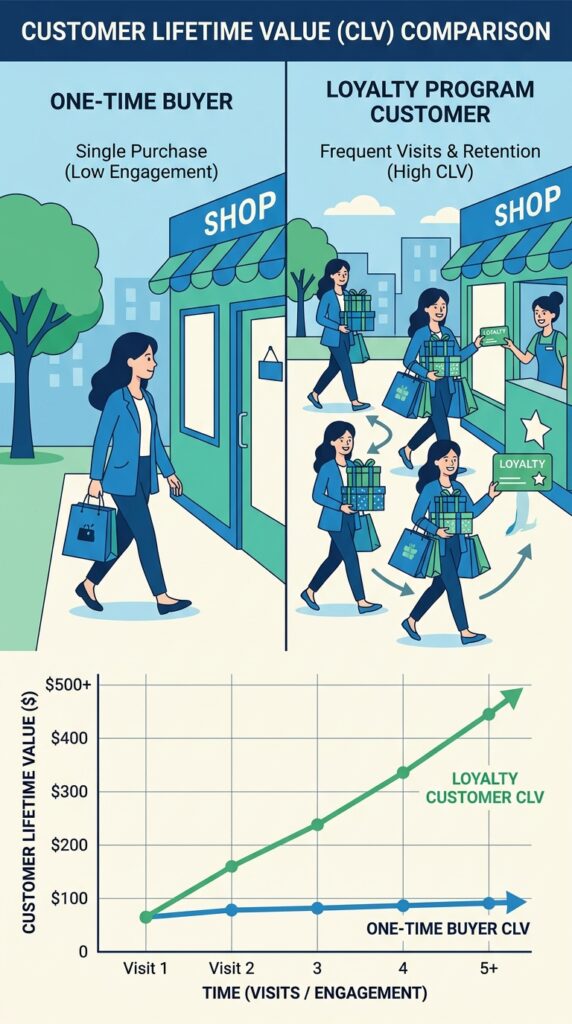
In most e‑commerce stores, roughly 20% of customers generate 80% of revenue. These are your loyal, repeat buyers. They’re also the ones most likely to leave positive reviews, refer friends, and try new products.
The goal of a retention strategy is simple: move more customers from the “one‑time” bucket into the “repeat” bucket.
💡 A 5% increase in retention can boost profits by 25–95%, depending on your industry. That’s a bigger impact than almost any other marketing investment you can make.
the ltv:cac ratio – the metric that predicts store survival
Most store owners track revenue. Almost none track the ratio that actually predicts whether their store will survive: LTV:CAC.
The formula:
text
LTV:CAC = Customer Lifetime Value ÷ Customer Acquisition Cost
What each number means:
| Ratio | What it tells you | Action |
|---|---|---|
| Below 1:1 | You lose money on every customer | Stop ads immediately |
| 1:1 to 2:1 | Barely breaking even | Improve retention or AOV |
| 2:1 to 3:1 | Viable but tight | Scale cautiously |
| 3:1 to 5:1 | Healthy and scalable | Invest more in ads |
| Above 5:1 | Under-investing in growth | Increase ad spend |
Example for a WooCommerce store:
- AOV: $50
- Purchase frequency: 3×/year
- Customer lifespan: 3 years
- LTV = $50 × 3 × 3 = **$450**
- CAC (from Google Ads): $75
- LTV:CAC = 6:1 → under-investing. Increase ad spend or add new channels.
How to improve LTV:CAC:
- Increase LTV: loyalty program (+20–40%), referrals (+15–30%), upsells (+10–20%)
- Decrease CAC: referrals (free), organic SEO (free), email retention (near-free)
💡 Where to find CAC: Google Ads → Campaigns → Cost per conversion. Facebook Ads → Ads Manager → Cost per purchase. If you don’t know CAC, you’re flying blind.
Part 2: Loyalty Programs – The Foundation of Retention
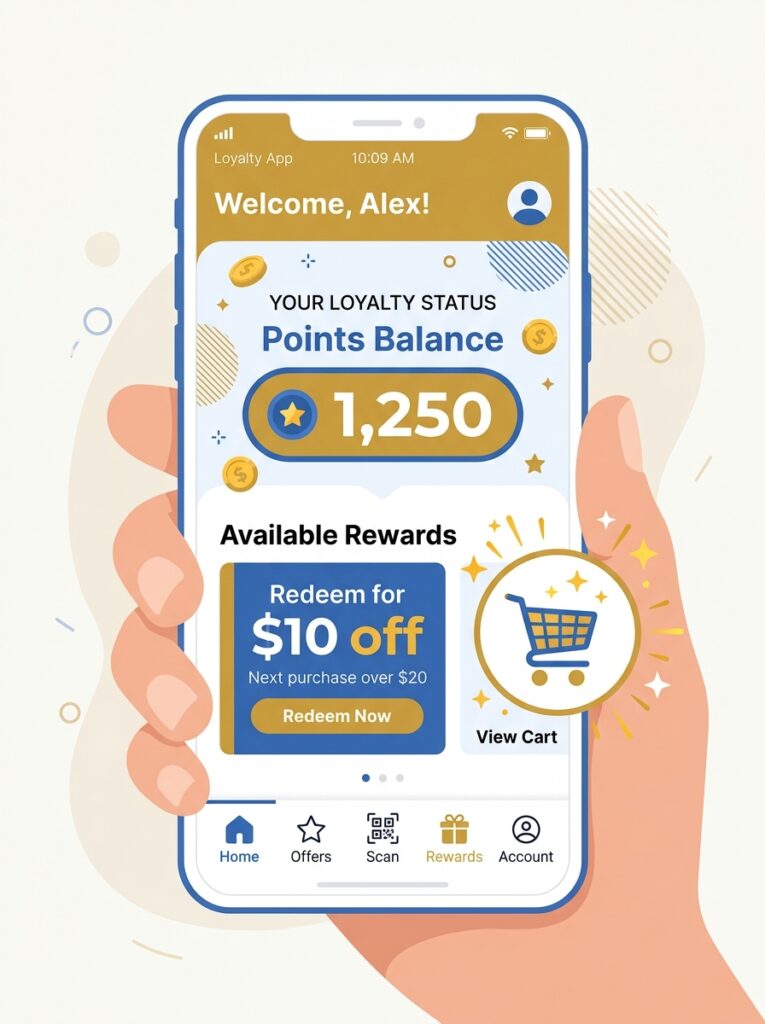
A loyalty program rewards customers for repeat purchases, encouraging them to choose your store over competitors. The most common model is points‑based: customers earn points for purchases, which they can redeem for discounts, free products, or other rewards.
What a good loyalty program should do
| Feature | Why it matters |
|---|---|
| Earn points on purchases | The core mechanic — customers accumulate value |
| Redeem points at checkout | Friction‑free redemption drives usage |
| Multiple earning actions | Not just purchases — referrals, reviews, birthdays, social follows |
| Clear rewards structure | Customers should understand how to earn and redeem |
| Integration with WooCommerce | Works seamlessly with cart, checkout, and My Account |
Best loyalty program plugins for WooCommerce in 2026
| Plugin | Free version | Standout feature |
|---|---|---|
| CodeKitSoft Loyalty Engine | Yes | Powerful points and rewards system designed to increase repeat purchases and customer retention |
| Unstoppable Points & Loyalty | Yes (full) | Lightweight loyalty program — customers earn points on purchases and redeem at checkout |
| Points and Rewards – LoyaltyX | Yes | Earn points on qualifying purchases; redeem at cart or checkout |
| Simple Points and Rewards | Yes | Clean, flexible points system with rewards for orders and referrals |
| MyRewards | Yes | 20+ earning actions (purchases, registration, birthday, referrals, reviews) and 10+ reward types |
| Loyalty for WooCommerce | Yes (basic) / paid upgrade | Integrates cleanly into WooCommerce workflow — orders, cart, checkout, and customer accounts |
| Australcode Points and Rewards | Yes | Dedicated points tables for performance that stays fast as your store grows |
My recommendation
Start with MyRewards or Unstoppable Points & Loyalty — both are fully featured, free, and easy to set up. They cover the essentials: earning points on purchases, redeeming at checkout, and displaying points in the My Account area.
If you need advanced features (tiered rewards, VIP levels, referral tracking), consider the premium versions of Loyalty for WooCommerce or CodeKitSoft Loyalty Engine.
Setting up a points‑based loyalty program (step by step)
- Install and activate your chosen loyalty plugin.
- Set the earning rate – for example, 1 point per $1 spent, or 10 points per $1.
- Set the redemption value – for example, 100 points = $5 discount.
- Configure earning actions – enable points for purchases, referrals, product reviews, birthday bonuses, and social follows.
- Display points balance – most plugins automatically add a points section to the My Account dashboard.
- Test the flow – place a test order, verify points are awarded, and redeem them at checkout.
💡 Keep the earning and redemption rules simple. Customers should be able to understand the value of their points without a calculator.
Part 3: Referral Programs – Turn Customers into Marketers
A referral program incentivises existing customers to bring in new ones. It’s one of the most cost‑effective acquisition channels because referred customers arrive with built‑in trust.
How referral programs work
| Step | What happens |
|---|---|
| 1 | Existing customer gets a unique referral link |
| 2 | They share it with friends, social media, or email |
| 3 | Friend clicks the link and makes a purchase |
| 4 | Both the referrer and the new customer receive a reward (discount, points, free product) |
Best referral plugins for WooCommerce
Most loyalty plugins (like MyRewards and LoyaltyX) include referral functionality. If you need a dedicated referral system:
- Advanced Coupons – includes referral coupon functionality
- YITH WooCommerce Points and Rewards – premium version includes referrals
- ReferralCandy – dedicated referral platform with WooCommerce integration (paid)
Setting up a referral program
- Choose the reward – typically 10–20% discount for both parties, or a fixed amount (e.g., $10 off).
- Generate referral links – most plugins auto‑generate unique links for each customer.
- Display the referral link – in the My Account dashboard, email signatures, and post‑purchase emails.
- Track and reward – when a referral purchase is completed, automatically award both parties.
💡 Referral programs work best when the reward is valuable enough to motivate sharing but not so large that it hurts your margins. A 10–15% discount for both parties is a good starting point.
Part 4: Returns & Exchanges – Building Trust Through Great Service
A generous returns policy might seem like a cost, but it’s actually a powerful retention tool. Customers who have a positive return experience are far more likely to buy again.
Why returns matter for retention
| Scenario | Outcome |
|---|---|
| Easy, hassle‑free return | Customer trusts you more. Buys again. |
| Difficult, frustrating return | Customer never comes back. May leave a negative review. |
| No return option | Customer hesitates to buy in the first place. |
Best returns management plugins for WooCommerce
| Plugin | Free version | Key feature |
|---|---|---|
| Retora – Returns & RMA | Yes | Self‑service returns system. Customers submit requests from My Account; you manage everything from a clean admin dashboard |
| ClaimPress | Yes (basic) | Warranty, return, refund, and exchange management — all‑in‑one |
| ReturnsUp Connector | Yes | Guided portal for customers — size exchanges with real‑time inventory, product exchanges |
| Recoup – Returns, Exchanges & Refunds | Yes | Focuses on revenue recovery — guides customers toward exchanges and store credit instead of refunds |
| Flexible Refund | Yes | Adds a refund form to My Account — customers can request refunds directly |
My recommendation
Start with Recoup — it’s free and focuses on keeping money in your store by encouraging exchanges and store credit instead of refunds. For digital products like plugins, returns are less common, but having a clear policy builds trust.
Setting up a returns policy
- Create a Returns Policy page — explain the process, timeframes, and conditions.
- Add the policy to your footer — make it easy to find.
- Install a returns plugin — automate the request process.
- Train your support team — handle returns quickly and professionally.
💡 For digital products (like plugins), you can offer a “no questions asked” refund window (e.g., 14 days). This builds trust and encourages hesitant buyers to purchase.
Part 5: Email Marketing for Retention
Email is the most effective channel for retention. Your customers have already given you their email address — use it to stay in touch.
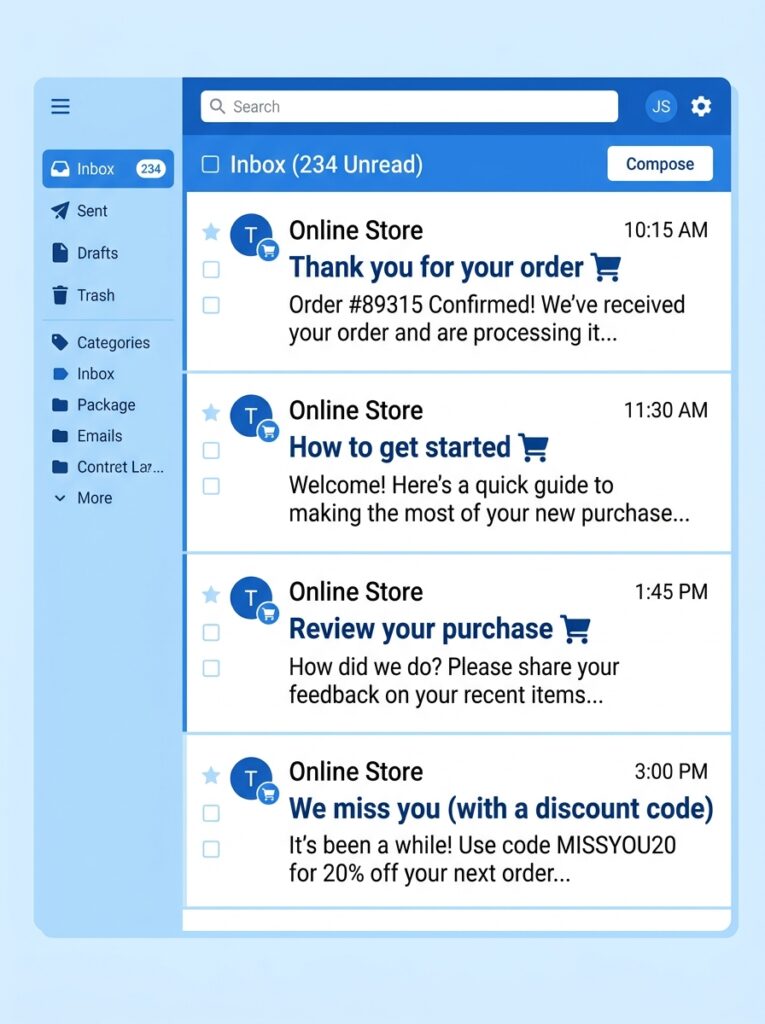
Retention email sequence (post‑purchase)
| Timing | Content | |
|---|---|---|
| Thank you / Order confirmation | Immediate | Confirm order, provide download links (for digital) |
| Onboarding / Getting started | 1‑2 days after purchase | Help them get the most value from their purchase |
| Feedback / Review request | 5‑7 days after purchase | Ask for a product review |
| Education / Tips | 2‑3 weeks after purchase | Share useful content related to their purchase |
| Win‑back / Re‑engagement | 60‑90 days after last purchase | Offer a discount to bring them back |
| Loyalty update | Monthly | Show points balance, remind them of rewards |
Best email plugins for retention
| Plugin | Free tier | Key retention features |
|---|---|---|
| Rivio | Yes (Beta) | AI‑powered email automation, cart recovery, customer segmentation, behavioural analytics, social proof, review requests |
| Mailchimp for WooCommerce | Yes (free) | Abandoned cart, post‑purchase follow‑up, win‑back campaigns |
| Retainful | Yes (free) | Abandoned cart, browse abandonment, welcome series, post‑purchase thank you, win‑back campaigns |
| AutomateWoo | Paid (starts $10/mo) | Deep WooCommerce integration, behavioural triggers, SMS via Twilio |
AI‑powered retention tools
AI Order Insights for WooCommerce automatically analyses orders and generates personalised upsell opportunities, discount recommendations, and retention strategies — all triggered the moment an order is placed.
Rivio combines cart recovery, AI‑powered email automation, customer segmentation, behavioural analytics, social proof, and review requests into a single plugin.
💡 AI tools are becoming essential for retention. They analyse customer behaviour at scale and suggest actions that would take a human hours to identify.
Part 6: Measuring Customer Lifetime Value (CLV)
You can’t improve what you don’t measure. Customer Lifetime Value is the most important metric for retention.
What is CLV?
Customer Lifetime Value (CLV) is the total revenue you can expect from a single customer over their entire relationship with your store.
How to calculate CLV (simple method)
text
CLV = Average Order Value × Purchase Frequency × Customer Lifespan
| Metric | How to calculate | Example |
|---|---|---|
| Average Order Value (AOV) | Total revenue ÷ Number of orders | $50 |
| Purchase Frequency | Total orders ÷ Unique customers | 4 orders/year |
| Customer Lifespan | Average years a customer stays active | 2 years |
| CLV | $50 × 4 × 2 = | $400 |
Where to find CLV in WooCommerce
- Go to WooCommerce → Analytics → Customers.
- You’ll see key metrics for each customer: total spent, number of orders, average order value, and last order date.
- For aggregate CLV, use plugins like Recurio or AI Order Insights which provide cohort analysis and LTV calculations.
What CLV tells you
| CLV range | What it means | Action |
|---|---|---|
| Low CLV | Customers buy once and leave | Focus on retention strategies |
| Medium CLV | Customers buy 2‑3 times | Upsell and cross‑sell |
| High CLV | Customers are loyal | Reward them, ask for referrals |
💡 If your average CLV is $100 and your average customer acquisition cost is $30, your LTV:CAC ratio is 3.3:1 — healthy. If it’s below 3:1, you’re spending too much to acquire customers.
Part 7: Retention Strategies That Actually Work
Here’s a quick reference of retention tactics you can implement today.
| Strategy | Difficulty | Impact | How to implement |
|---|---|---|---|
| Loyalty points program | Low | High | Install MyRewards or Unstoppable Points |
| Post‑purchase email sequence | Low | High | Set up Mailchimp or Rivio automations |
| Referral program | Medium | High | Enable referral features in loyalty plugin |
| Customer reviews | Low | Medium | Send review requests via email |
| Product education | Low | Medium | Send tips and tutorials after purchase |
| Exclusive discounts for repeat buyers | Low | High | Create coupons for customers with 2+ orders |
| Re‑engagement campaigns | Medium | High | Email customers inactive for 60+ days |
| Returns policy | Low | High | Create clear policy; use Recoup for exchanges |
| Subscription retention offers | Medium | High | RetainFlow shows offers when subscribers try to cancel |
Quick wins for today
- Send a “thank you” email to every new customer — with a discount code for their next purchase.
- Add a loyalty points widget to your My Account page.
- Create a returns policy page and link it in your footer.
- Ask for product reviews 5‑7 days after purchase.
- Segment your customers by order count and send targeted offers.
retention automation: what to set up this week
Manual retention doesn’t scale. Here are the 7 automations every WooCommerce store should have running:
| # | Automation | Trigger | Plugin |
|---|---|---|---|
| 1 | Welcome series | First purchase | Mailchimp, Rivio |
| 2 | Review request | 7 days after delivery | Rivio, AutomateWoo |
| 3 | Second-purchase discount | 30 days, no 2nd order | AutomateWoo |
| 4 | Loyalty points update | Monthly, active customers | MyRewards |
| 5 | Win-back campaign | 60 days inactive | Retainful, AutomateWoo |
| 6 | Birthday discount | Customer birthday | MyRewards, AutomateWoo |
| 7 | Referral reminder | 14 days post-purchase | ReferralCandy, MyRewards |
Time to set up: ~4 hours total across all 7.
Expected impact: 15–40% increase in repeat purchase rate within 6 months.
Priority order (if you only have 1 hour):
- Welcome series (highest ROI)
- Win-back campaign (recovers lost revenue)
- Review request (social proof + SEO)
💡 The most common mistake: setting up only email automations and forgetting on-site. Add a loyalty points widget to My Account, show referral links in the footer, display “You’ve earned X points” on the cart page.
What’s Next?
You now have a complete customer retention system — loyalty programs, referrals, returns management, email automation, and CLV measurement. Your store is ready to turn one‑time buyers into loyal, repeat customers.
👉 Next article in this series: WooCommerce Security & Performance – Protecting Your Store and Keeping It Fast
We’ll cover securing your WooCommerce store, hardening WordPress, using security plugins, and optimising performance for high‑traffic stores.
What retention strategy are you most excited to try? Loyalty points? Referral programs? Email automation? Let me know in the comments.
📌 Key Takeaways (for skimmers)
- Increasing retention by 5% can boost profits by 25–95%.
- Loyalty programs are the foundation of retention — start with MyRewards or Unstoppable Points & Loyalty (both free).
- Referral programs turn customers into marketers — reward both the referrer and the new customer.
- Returns management builds trust — use Recoup to encourage exchanges and store credit instead of refunds.
- Email is the most effective retention channel — set up post‑purchase sequences, review requests, and win‑back campaigns.
- AI‑powered tools (Rivio, AI Order Insights) automate retention at scale.
- Measure CLV (Customer Lifetime Value) — it’s the most important metric for retention health.
- Quick wins: thank‑you emails, loyalty points, returns policy, review requests, customer segmentation.
🔗 Internal Links
- Article #1 – WooCommerce in 2026 – Market Share & Trends
- Article #2 – Installing WooCommerce & Setup Wizard
- Article #3 – Adding Your First Product
- Article #4 – License Keys for WooCommerce
- Article #5 – Optimising Checkout for Digital Products
- Article #6 – Abandoned Cart Recovery
- Article #7 – Managing Orders & Customers with HPOS
- Article #8 – Marketing & Promotions
- Article #9 – Recurring Revenue & Subscriptions
- Article #10 – Google Listings & Ads for WooCommerce
- You are here – Customer Retention & Loyalty Programs
- Article #12 – WooCommerce Security & Performance (coming soon)